


-
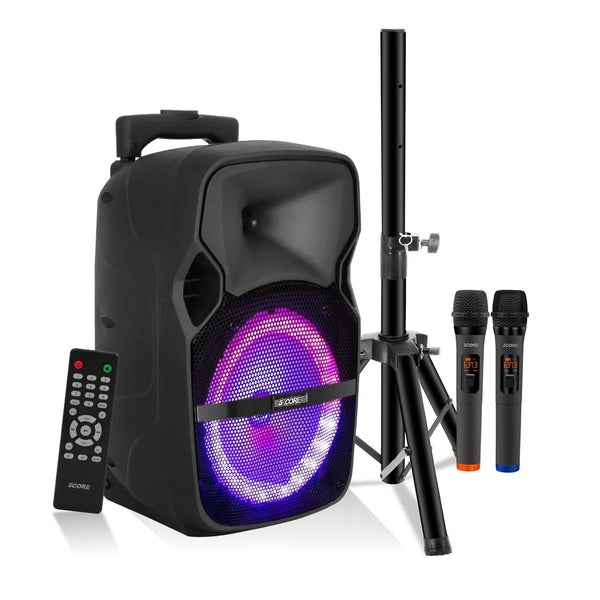
Vendor: 5 Core
5 Core Party Speaker Bluetooth 250W Big Powered Rechargeable Outdoor PA DJ System w 2 Wireless Mics
SKU: ACTIVE HOME 8 2-MIC OPEN BOXSale price: $62.99
Regular price: $140.00 -
Vendor: 5 Core
5 Core Party Speaker Bluetooth 250W Big Powered Rechargeable Outdoor PA DJ System w 2 Wireless Mics
SKU: ACTIVE HOME 8 2-MICSale price: $80.99
Regular price: $140.00 -
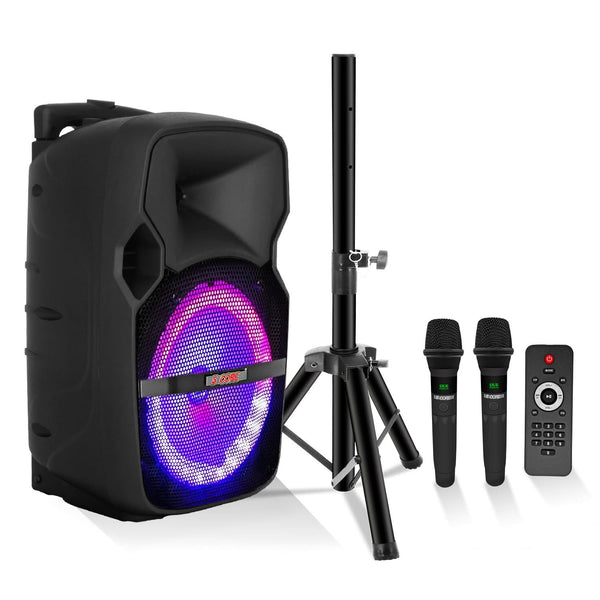
Vendor: 5 Core
5 Core Party Speaker Bluetooth 400W Big Powered Rechargeable Outdoor PA DJ System w 2 Wireless Mics
SKU: ACTIVE HOME 10 2-MICSale price: $104.61
Regular price: $200.00
Introduction – Why a Real Party Speaker Changes Everything
A regular grocery-store Bluetooth speaker delivers tinny sound that distorts at half volume, lacks bass punch beyond faint thump, drains batteries in 2-4 hours, and fails outdoors with weak projection—leaving parties flat and conversations strained. True party speakers pump deep, chest-thumping bass from dedicated woofers you physically feel, maintain crystal clarity at ear-splitting levels filling 50+ people without breakup, and run 12-24 hours on robust batteries for all-night events.
Built rugged with IP65+ weather resistance, they shrug off splashes, dust, or drops unlike fragile toys that crack on grass. Microphone inputs deliver clean karaoke or announcements over music, enabling MC calls or sing-alongs—essential features absent in basic portables. Upgrading transforms awkward gatherings into immersive vibes where sound drives the energy.
Source- Samesay
Party Speaker Terminology Explained (So You Don’t Get Fooled by Specs)
RMS vs PMPO Watts: RMS (e.g., 100-300W) measures continuous real-world power without distortion for hours of play; PMPO (thousands of watts) inflates peak bursts—ignore it, as cheap speakers hit 10W RMS despite "5000W PMPO" claims that crack immediately.
IP Rating Reality: IPX4 splashes wrists; IP65 dust/rain-proof for poolsides; IP67 survives brief submersion—higher numbers mean genuine party durability, not marketing stickers on fragile plastic.
“360° Sound” Myths: True omnidirectional drivers project evenly all around for crowds; gimmick versions just bounce weak stereo off walls—test in open air, where most fail beyond 5m.
TWS (True Wireless Stereo): Pairs two identical speakers for left/right channels doubling bass/volume via Bluetooth; Party Mode syncs multiples for bigger soundstages without cables.
DJ Lights: Beat-synced LEDs (strobes, waves) amp vibes but drain 10-20% battery; customizable apps control patterns—avoid if prioritizing runtime over flash.
Mic/Guitar Inputs: 6.35mm jacks with volume/EQ for clean karaoke or live jams; true party units handle SPL without feedback unlike toys clipping vocals. Focus RMS, IP67, and real bass woofers over hype.
Types of Party Speakers Available
Compact Portable Party Speakers (15–30 L, 30–80 W): Backpack-sized with 6-12 hour batteries for picnics or small gatherings of 10-20 people, featuring app EQ, RGB lights, and IPX5 splash resistance—lightweight under 5kg for easy carry.
Mid-Size Outdoor/Tailgate Speakers (80–150 W): Wheeled designs fill 50+ person tailgates or beaches with deep bass woofers, 12-20 hour runtime, IP65 weatherproofing, and mic inputs for announcements—handles wind without mud.
Large Tower-Style Party Speakers (150–400 W+): Floor-standing beasts dominate house parties or events for 100+ crowds, with multi-driver arrays, 100+dB SPL, dynamic lights, and guitar/mic jacks—AC-powered for unlimited play with optional batteries.
Professional DJ Line-Array Party Speakers: Modular stacks (200W+ per unit) deliver even coverage for weddings or clubs, app-controlled EQ/DSP, XLR inputs, and flight cases—pro-grade for 200+ people with low distortion.
Karaoke-Focused Speakers with Wired/Wireless Mic Inputs: Dual mic channels with echo/reverb effects and scoring, 100-200W for vocals over tracks, LED displays—perfect for home parties blending music and singing.
True Waterproof Floating Pool Speakers: IP67 buoyant models (50-100W) drift on water with subwoofers emphasizing bass, UV-resistant grilles, and TWS pairing—survive full submersion for poolside bashes.
Battery-Powered vs AC-Only Models: Battery units (8-24 hours) prioritize portability for outdoors; AC-only towers unleash max power indefinitely indoors—hybrids offer both via swappable packs.
Key Features to Look for When Buying a Party Speaker
Real RMS Power vs Fake PMPO Claims: RMS (80-400W) delivers sustained volume without distortion for hours; PMPO inflates peaks unrealistically—focus RMS for parties where cheap "5000W PMPO" units crack at 50% volume.
Driver Configuration: Dedicated 5-12" woofers handle deep bass, 1-2" tweeters clarify highs, passive radiators boost low-end thump—avoid single-driver toys lacking punch.
Actual Battery Life at Realistic Volumes: 12-24 hours at 70% volume (not max); test reviews over claims, as lights/subs drain 20-30% faster—lithium packs outperform lead-acid.
IP67 vs IPX5 vs No Rating: IPX5 survives light splashes; IP65 dust/rain-proof; IP67 fully submersible for pools—essential for outdoor reliability vs unrated plastics that fail in drizzle.
Microphone & Guitar Inputs Quality: Dual 6.35mm jacks with independent volume/EQ/echo prevent feedback and muddy vocals; true party units prioritize clean karaoke over gimmicks.
EQ Modes and App Control Usefulness: Bass/party/podcast presets plus 5-10 band graphic EQ via app fine-tune rooms; useful for crowds, ignore if Bluetooth-only without customization.
True Wireless Stereo (TWS) Pairing: Links identical portable speakers for stereo imaging doubling bass/coverage up to 30m; Party Mode syncs multiples for massive soundstages.
LED Light Modes: Beat-sync strobes/waves enhance vibes but toggle off to save battery; app-customizable avoids annoyance in daylight.
Handle/Wheels/Trolley Design: Telescopic handles, all-terrain wheels on mid/large models enable one-person transport over grass; backpack straps suit compacts.
Charging Port (USB Power Bank): USB-A/C outputs (10-20W) charge phones mid-party; higher amps sustain multiple devices without killing portable speaker runtime.
Safety First – The Most Common Party Speaker Failures and How to Avoid Them
Overheating and Thermal Shutdown: Max volume for hours blocks vents, causing amp protection to cut power. Ensure 6+ inches clearance around ports, avoid direct sun/crowds blocking airflow, and limit bass boost at 80%+ volume—use fans for long events.
Water Damage Myths (IP67 Limits): IP67 handles submersion 1m/30min but fails with prolonged pool use or high-pressure hoses; myths claim "indestructible"—dry internals post-exposure, avoid internals open in rain.
Battery Swelling and Fire Risks: Cheap lithium packs overcharge or puncture; use branded chargers, store at 50% charge in 15-25°C, avoid full discharge—inspect swelling quarterly and recycle faulty units.
Blown Drivers from Bass Boost at Max Volume: Heavy low-end at peak strains woofers beyond RMS limits. Set EQ flat initially, keep peaks under 90% meter, and match source volume to room size.
Microphone Feedback Disasters: Mic pointed at speaker or echo maxed creates loops. Position mic away from horn (>45° angle), use low mic gain, enable anti-feedback if available.
Cheap Power Adapters Causing Damage: Wrong voltage/amperage fries internals. Match exact specs (e.g., 24V/5A), avoid extensions over 10m, inspect cables for frays.
Transport Damage (Handle and Wheel Failures): Plastic handles snap, wheels crack on curbs. Choose metal-reinforced designs with telescopic trolley systems, test before buying.
Source- Samesay
How to Properly Use a Party Speaker (Get Maximum Sound Without Breaking It)
Correct Volume & Bass Boost Usage: Start at 50-70% master volume for clear headroom, gradually raising as crowd grows—avoid maxing both simultaneously, as bass boost at 90%+ strains woofers causing distortion or shutdown. Use app EQ for subtle +3-6dB low-end tweaks instead of extreme "deep" modes during long sessions.
Microphone Technique to Avoid Feedback: Hold mic 4-6 inches from mouth, point away from portable speaker (>45° angle), start mic volume at 30-50% with no echo initially—sweep speaker slowly across crowds, enabling anti-feedback if available.
Best Placement for Outdoor Coverage: Elevate 1-2m off ground (stand/trolley) facing audience center, 3-5m from walls for bass reflection; avoid corners trapping lows or direct wind—space TWS pairs 5-10m apart for even coverage.
Pairing Two portable Speakers in TWS Mode: Power both off, press TWS button simultaneously within 1m (Bluetooth master detects slave), confirm LED link—test stereo imaging before full volume, range drops 20-30% outdoors.
Using Guitar Input Without Humming: Plug instrument cable straight (no adapters), ground lift if humming occurs, set guitar volume/EQ to flat first—keep master under 70% to prevent amp-like clipping, disable bass boost.
Source- Soundcore
Maintenance & Long-Term Care – Keep Your Party Speaker Pumping for 5–10 Years
Cleaning Grilles and Passive Radiators: Wipe grilles of your portable bluetooth speaker weekly with soft microfiber cloth and compressed air to remove dust/sweat; wash removable foam in mild soap water and air-dry fully—avoid liquids near drivers or ports to prevent shorts.
Battery Health and Storage Tips: Charge to 50-80% before long storage (3+ months) at 15-25°C, avoiding full discharge or 100% constant charge; cycle monthly during off-season, inspect for swelling—lithium lasts 500+ cycles with proper care.
Protecting Ports and Rubber Flaps: Seal unused USB/AUX ports with covers during transport; clean flaps with dry brush to prevent dirt buildup causing water ingress—test seals yearly by rinsing (IP67 only).
Firmware Updates: Many 2025 models offer app-based updates improving EQ, battery optimization, and TWS stability—check manufacturer site quarterly, update on stable WiFi with 50%+ battery to avoid bricking.
Wheel and Handle Lubrication: Apply silicone spray sparingly to axles/bushings yearly for smooth rolling; tighten loose bolts post-transport—metal-reinforced designs outlast plastic prone to cracking.
When to Replace the Battery: Swap the portable bluetooth speaker after 2-4 years or when runtime halves (under 6 hours at 50% volume); professional service uses matched lithium packs—DIY risks voiding warranty.
Real-World Scenarios – Which Party Speaker You Actually Need
Backyard BBQ for 20–40 people: Mid-size outdoor speaker (80–150W), IP65 rating, battery-powered with 12+ hour runtime, TWS pairing capability, and mic input for toasts.
Beach / pool party: True waterproof floating pool speaker (50–100W), IP67 fully submersible, compact portable design under 5kg, UV-resistant with passive radiators for bass over waves.
House party with karaoke: Karaoke-focused portable speaker (100–200W), dual wired/wireless mic inputs with echo/reverb/volume controls, tower-style for indoor punch, app EQ for vocals.
College tailgate: Mid-size outdoor/tailgate speaker (80–150W), wheeled trolley with handle, IP65 weatherproof, 12-20 hour battery, RGB lights for night games.
Mobile DJ on a budget: Compact portable (30–80W), battery-powered with AC option, guitar/mic inputs, TWS for stereo pairing, lightweight under 10kg for car trunk transport.
Kids’ Portable Bluetooth Speaker: Compact portable (30–80W), fun LED light shows, Bluetooth with simple app control, short 6-8 hour battery, low price point with mic for games.
Outdoor wedding reception: Large tower-style (150–400W+), AC-powered with battery backup, professional mic inputs, wide dispersion drivers for 100+ coverage, weather-resistant IP65.
Camping trip: Compact portable (15–30L, 30–80W), 20+ hour battery, IP67 ruggedized, backpack strap, USB power bank output to charge devices overnight.
Frequently Asked Questions – Everything People Search for
Question: What's RMS vs PMPO on outdoor party speakers?
Answer: RMS measures continuous power (e.g., 100W real output); PMPO inflates peaks—trust RMS for distortion-free volume.
Question: How long does battery life really last?
Answer: 12-24 hours at 70% volume; drops 20-50% with bass boost/lights—test reviews over claims.
Question: IP67 vs IPX5—which survives rain/pool?
Answer: IPX5 handles splashes; IP67 dust-tight and submersible 1m/30min—essential for outdoors.
Question: Can I use portable party speakers for karaoke?
Answer: Yes with mic/guitar inputs; look for echo/reverb/volume controls to avoid feedback.
Question: TWS pairing—how far apart for best stereo?
Answer: 5-10m line-of-sight; Party Mode syncs multiples for bigger coverage.
Question: Do LED lights drain battery much?
Answer: 10-20% faster; toggle off via app for max runtime.
Question: Will outdoor speakers work well at a BBQ?
Answer: Mid-size 80-150W IP65 with wheels/battery for 20-40 people.
Question: Overheating at max volume—how to prevent?
Answer: Keep vents clear, limit bass boost at 80%+, use fans for all-night play.
Question: Can I charge phones from the portable speaker?
Answer: USB ports (10-20W) work as power banks; higher amps sustain multiple devices.
Question: What's better for pool parties—floating or IP67?
Answer: IP67 buoyant models survive submersion with bass emphasis.
Question: App control on portable bluetooth speaker worth it?
Answer: Yes for EQ presets, lights, firmware—Bluetooth-only skips customization.
Question: How loud for house party of 50 people?
Answer: 150W+ tower with 100+dB SPL fills rooms cleanly.
Question: outdoor speakers Mic feedback fixes?
Answer: Point mic away from speaker, low gain, 45°+ angle.
Question: Battery swelling—signs and fixes?
Answer: Bulging case or short runtime; store 50% charge, recycle faulty packs.
Question: Wheels/handles break easy?
Answer: Metal-reinforced models last; lubricate axles yearly.
Question: Firmware updates needed?
Answer: Yes on 2025 models for EQ/battery fixes—check app quarterly.
Question: Clean after beach use?
Answer: Rinse ports dry, air-dry fully before storage.
Question: Guitar input humming?
Answer: Ground lift switch, quality cables, flat EQ start.
Question: Tailgate volume without distortion?
Answer: 80-150W mid-size at 70% with app limiting.
Question: Outdoor speakers for Kids' party safe?
Answer: Compact 30-80W with fun lights, low bass to protect ears.
Conclusion – Your Party Deserves a Speaker That Shows Up
A great party speaker isn’t the one with the biggest fake wattage number or the most blinding LED show.
It’s the one that starts when the first guest arrives, keeps going when the neighbors start texting, still has battery at 2 a.m., survives an accidental splash or a tipsy dancer leaning on it, and lets everyone—from the shy friend to the wannabe rapper—sound better than they thought they could.
You no longer have to choose between “tiny and clean” and “huge and distorted.” Modern party speakers can deliver real bass you feel in your chest, clear vocals over the noise of 50 people, and enough battery life to outlast even the most stubborn after-party—all in a box you can actually move.
Take everything you’ve learned here (real RMS power, honest battery claims, IP ratings that actually mean something, microphone technique, placement tricks, and the small habits that prevent 90% of failures) and you’ll never again drag home a speaker that dies halfway through the night or sounds like a broken radio.
Pick the size and features that match the parties you actually throw—not the fantasy ones in the ads. Do that, and the music will take care of itself.
Alex Even
Hi, I’m Alex Even. I’ve been working in the pro audio industry for over 15 years, specializing in everything from studio recording setups to live sound systems. Whether it’s fine-tuning a PA DJ system, choosing the right microphone, drum stool, keyboard bench or setting up a home studio, karaoke setup, I’ve spent years helping musicians, audio engineers, and content creators get the sound they’re looking for. I’m passionate about making audio technology easy to understand and even easier to use—because great sound should be accessible to everyone.
