


-
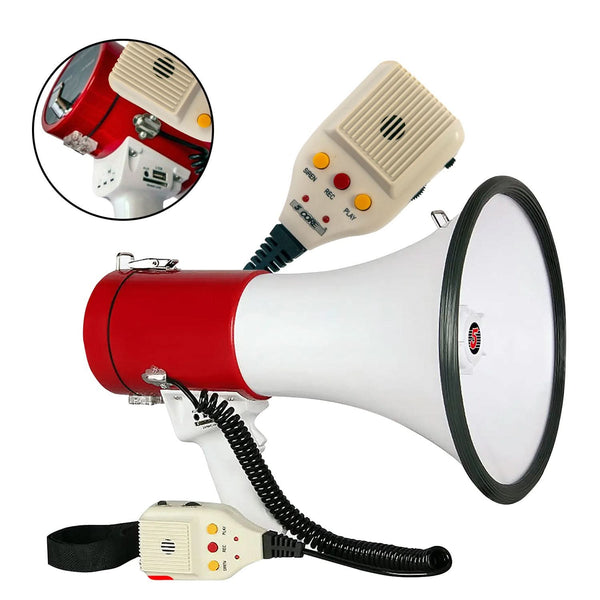
Vendor: 5 Core
5 Core Megaphone 50W Bull Horn Professional PA Speaker w 1200 Yards Range Loud Siren Voice Amp
SKU: 66SFSale price: $39.99
Regular price: $69.00 -
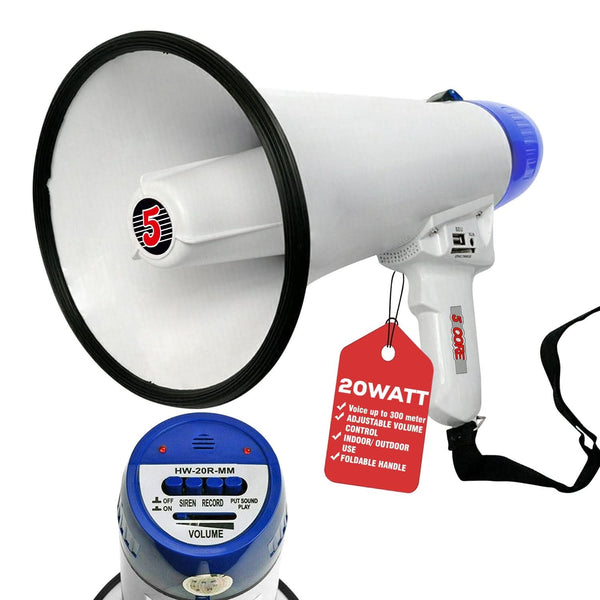
Vendor: 5 Core
5 Core Megaphone 20W Bull Horn PA Speaker w 300 Yards Range Loud Siren Voice Amp Portable Megafono
SKU: 20R-USB WoBSale price: $25.21
Regular price: $50.00 -
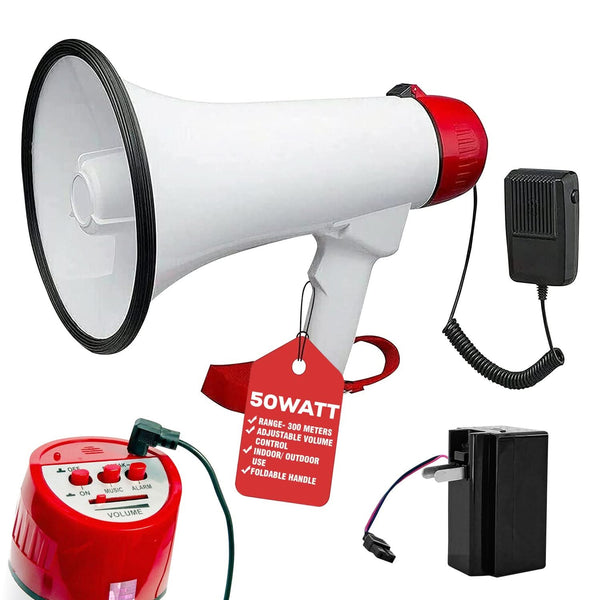
Vendor: 5 Core
5Core Megaphone Bullhorn Speaker 50W Bull Horn Rechargeable Cheer Megafono 300 Meter
SKU: 20RF WBSale price: $41.49
Regular price: $83.00 -
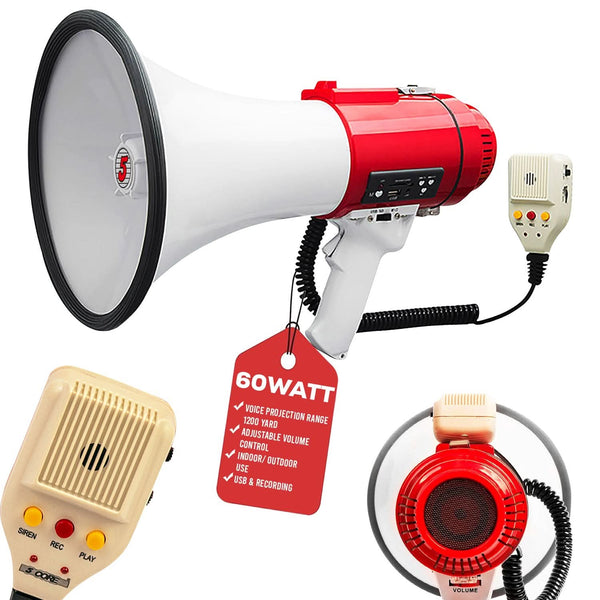
Vendor: 5 Core
5 Core Megaphone 60W Bull Horn Professional PA Speaker w 1200 Yards Range Loud Siren Voice Amp
SKU: 77SFSale price: $39.99
Regular price: $76.00 -

Vendor: 5 Core
5 Core Megaphone 50W Bull Horn PA Speaker w 300M Range Loud Siren Voice Amplifier Portable
SKU: 20RFSale price: $29.99
Regular price: $60.00 -

Vendor: 5 Core
5 Core Megaphone 30W Bull Horn PA Speaker w 800 Yards Range Siren LED Light Loud Mini Megafono
SKU: 148 LEDSale price: $23.89
Regular price: $48.00 -
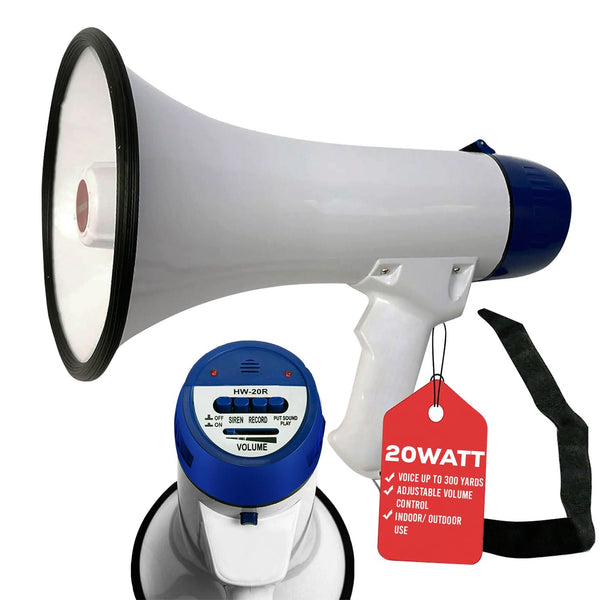
Vendor: 5 Core
5 Core Megaphone 20W Bull Horn PA Speaker w 300 Yards Range Loud Siren Voice Amp Portable Megafono
SKU: 20R WoBSale price: $25.21
Regular price: $50.00


Why You Actually Deserve a Real Industrial Megaphone
In 2025, you deserve a real industrial-grade megaphone because unlike the $10 toy store versions, true industrial megaphones are designed for critical applications requiring reliable, long-range sound projection and durability. Toy bullhorn typically run on low power (5–10 watts) with limited range, lightweight plastic builds, and basic amplification meant for casual use like children's play or small gatherings. In contrast, industrial megaphones often start at 40 watts and above, employ robust materials like ABS or fiberglass, and include advanced features like powerful class-D amplifiers and anti-feedback circuitry. These features ensure clear voice amplification over large distances, essential for crowd control, emergency evacuations, coaching, and search and rescue operations, where underpowered equipment can cause communication failures and safety hazards.
Using underpowered or toy megaphones in real-world scenarios can lead to serious issues such as failing to command a crowd clearly during emergencies, ineffective evacuation instructions, or inability to coordinate teams in noisy environments. Industrial-grade megaphones provide the power, clarity, and durability needed to meet these challenges with features like sirens, recording capabilities, and ergonomic shoulder-strap designs for extended use.
The 2025 market for industrial megaphones bullhorn includes predominantly lithium-ion batteries, which offer lighter weight and longer runtime compared to older lead-acid models. Modern megaphones also commonly feature 50 watt plus class-D amplifiers for efficient, cool operation, and ergonomic shoulder straps for improved comfort during prolonged use. Some models incorporate Bluetooth and USB playback functions, explosion-proof designs for hazardous environments, and waterproof ratings (IP66+) for marine or outdoor use, making them versatile across demanding industries.
This distinction between toy versus industrial megaphones, the critical safety and practical reasons for choosing the right device, and the latest technological standards define why investing in a real industrial-grade megaphone bullhorn is essential in 2025 for anyone serious about effective communication in professional, emergency, or large-scale environments.
Source- Thunderpowermegaphones
Types of Industrial & Professional Megaphones
Industrial and professional megaphones come in a variety of types designed to suit different power needs, environments, and functionalities. Understanding these types helps you select the right megaphone loud speaker for your specific use case.
Handheld Bullhorns (10–60 W): Handheld bullhorn megaphones range from 10 to 60 watts and are portable with ergonomic pistol grips. They are ideal for small to medium-scale applications such as school events, sports coaching, and casual crowd control. These models typically project sound up to 700-1000 meters with light to moderate battery life, often rechargeable via lithium-ion packs. Many handhelds feature sirens and recording functions for added utility.
Shoulder-Strap Megaphones: These megaphones are designed for prolonged use with adjustable shoulder straps for comfort, essential in events requiring extended communication periods like protests, large outdoor venues, or emergency response. They generally offer higher wattage (40-120W) for stronger projection and may include Bluetooth streaming and USB playback for message flexibility. Their build prioritizes durability and user comfort.
Rechargeable vs Battery-Only Models: Rechargeable bullhorn megaphones equipped with lithium-ion batteries have become standard due to their longer runtimes, lighter weight, and eco-friendliness compared to traditional battery-only (alkaline or lead-acid) units. Rechargeable models often include integrated chargers and better power management. Battery-only megaphones, while simpler, remain popular in remote areas without reliable power access.
Siren, Whistle, Recording, Bluetooth, USB Playback Features: Modern industrial megaphones often come loaded with multiple auxiliary functions. Built-in sirens and whistles provide attention-grabbing signals for emergencies or crowd alerts. Recording capabilities allow pre-loaded or captured messages to be played back repeatedly. Bluetooth and USB inputs enable wireless streaming and easy content updating, enhancing versatility for professional use.
Explosion-Proof & Intrinsically Safe Models: Specialized explosion-proof bullhorn megaphones are intrinsically safe for hazardous environments such as oil rigs, mines, and chemical plants. Constructed with materials and seals that prevent sparks, these models comply with strict safety certifications. Their rugged design resists harsh conditions and ensures reliable operation where normal electronics could pose risks.
Marine & Waterproof Megaphones (IP66+): Marine-grade megaphones meet high waterproof ratings (IP66 or above) making them suitable for maritime use, search and rescue, and outdoor environments prone to heavy rain or salt spray. These units feature corrosion-resistant materials and floating designs to prevent loss. Their sound projection remains clear despite harsh weather conditions.
In summary, your professional megaphone loud speaker choice should be guided by the application, required power, and environment conditions to select between handheld or shoulder-strap models, rechargeable or battery-only, and added features like sirens or Bluetooth. Explosion-proof and waterproof megaphones serve specialized needs that demand safety and durability beyond standard models.
Source - Audioinstallations
Key Features to Look For When Buying an Industrial Megaphone
Wattage vs Real-World Distance: In 2025, 40 watts has become the new minimum power threshold for industrial megaphones to reliably cover practical distances. While lower wattage units (10–25 W) can be useful for small crowds within 100–300 meters, a 40 W+ megaphone enables clear voice projection up to 600–1000 meters in open environments. The advertised decibel ratings often reflect measurements close to the device (e.g., 0.5 meters), but sound volume drastically decreases over distance, especially outdoors with wind and ambient noise.
Battery Life Reality Check: Battery life claims can be misleading. Many units advertise up to 20 hours, but real-world continuous talk times are closer to 8 hours before performance drops. Rechargeable lithium-ion batteries dominate the market, providing both longer runtimes and lighter weight versus older lead-acid or alkaline options. Always consider if the model supports easy battery replacement and includes charging safeguards.
ABS vs Fiberglass vs Metal Body: The body material affects durability and weight. ABS plastic is common for lightweight, cost-effective models suitable for indoor or light outdoor use. Fiberglass offers better impact and weather resistance, making it ideal for construction or marine environments. Metal-bodied megaphones provide superior ruggedness but tend to be heavier and can corrode if not properly coated.
Class-D vs Class-AB Amplifiers: Class-D amplifiers are the standard in 2025 industrial megaphones due to their high power efficiency and low heat generation. This efficiency extends battery life and allows for more compact designs. Class-AB amplifiers, though producing excellent sound quality, generate more heat and consume more power, making them less common in portable megaphones.
Anti-Feedback Circuitry Explained: Feedback squeals can disrupt communication and damage hearing. Modern bullhorn megaphones include anti-feedback circuitry that detects and suppresses these high-pitched noises by automatically adjusting microphone gain or phase. This feature is crucial for maintaining clear output, especially in crowded or echo-prone environments.
Microphone Types and Detachable Mics: Dynamic microphones are robust and less sensitive to environmental noise, preferred for loud outdoor settings. Condenser microphones offer clearer, more detailed sound but require power and are better indoors or controlled environments. Detachable microphones add versatility, allowing replacements or upgrades without buying a new megaphone.
Trigger vs Push-to-Talk vs Voice-Activated (VOX): Trigger-style megaphone loud speaker offer direct control with a comfortable trigger button. Push-to-talk requires holding a button while speaking, reducing accidental transmission but sometimes less convenient. Voice-activated (VOX) models transmit automatically when speech is detected, allowing hands-free use but may pick up unwanted ambient sounds.
Choosing a megaphone loud speaker with these 2025 features ensures the best balance of power, durability, efficiency, and usability tailored to your professional needs, from emergency response to event coordination.
Source - Thunderpowermegaphones
Safety First – How to Prevent Your Megaphone Bullhorn From Failing When Lives Depend on It
Industrial megaphones used in emergencies must prioritize safety features to avoid failures that could endanger lives during evacuations or crowd control. Reliable protection mechanisms ensure consistent performance under stress.
Overheating Protection & Thermal Cutoffs
High-wattage megaphones generate significant heat during extended use, risking amplifier damage or fire hazards. Thermal cutoffs automatically shut down the device when temperatures exceed safe limits, typically around 70-80°C, preventing meltdowns. Class-D amplifiers in 2025 models further reduce heat buildup through efficiency.
Battery Reverse-Polarity Protection
Incorrect battery installation can cause immediate failure or explosions in lithium-ion packs. Reverse-polarity protection uses diodes or circuits to block damage, safeguarding against user error in high-pressure situations. Always verify this feature in specs for mission-critical gear.
Drop-Test Ratings (MIL-STD vs Real-World 1.5 m Concrete Drops)
MIL-STD-810 ratings simulate military-grade drops from 1.5 meters onto concrete, testing for operational integrity post-impact. Real-world drops often exceed lab conditions in rugged environments like construction sites. Prioritize loud speaker ABS or fiberglass bodies with explicit drop-test claims over unverified models.
Why Cheap AliExpress Megaphones Die in the Rain
Low-cost imports frequently lack proper IP sealing, using thin plastics and exposed ports that corrode or short-circuit in moisture. Rain infiltrates batteries and circuits, causing instant failure without gaskets or conformal coatings. Invest in certified units for wet environments like search and rescue.
Electrical Safety Certifications (CE, FCC, RoHS)
CE marking ensures compliance with EU safety, health, and environmental standards, including electromagnetic compatibility. FCC certification limits radio interference, while RoHS restricts hazardous materials like lead. These validate safe operation in professional settings, avoiding legal liabilities.
Selecting megaphone loud speaker with these safety features minimizes downtime and risks, ensuring dependable performance when communication saves lives in 2025 industrial applications
Source- Fireprotectiononline
How to Use & Setup Guide for Industrial Megaphones
First-Time Charging Best Practices (Avoid Memory Effect): For rechargeable lithium-ion megaphones in 2025, it is ideal to fully charge the battery before first use to maximize battery health. Avoid letting the battery completely drain on the first few cycles, as partial charges help prolong battery lifespan. Most modern Li-ion batteries do not suffer the old "memory effect" seen in NiCad types, but consistent full bullhorn charges and avoiding over-discharging remain best practice.
Correct Microphone Technique (Distance, Angle, Wind Noise): Speak directly into the microphone at a distance of about 5-10 cm (2-4 inches). Avoid whispering or speaking too softly to ensure the internal mic captures clear sound. Hold the mic at a slight angle and shield it partially from wind to reduce noise distortion. Using a windscreen if available can improve outdoor clarity.
How to Use Siren / Whistle / Recording Functions: Activate sirens or whistles via dedicated toggle switches or buttons on the device—often near volume controls—to emit loud alert sounds for crowd attention. Recording functions allow you to capture or upload preset messages; typically started and stopped with one-button recording controls. Playback can be triggered manually or programmed for loops on advanced models.
Pairing Auxiliary Input or Bluetooth (If Available): To pair Bluetooth-enabled bullhorn, turn on Bluetooth mode, then use your smartphone or device to search and connect to the megaphone’s signal. Auxiliary input jacks let you plug in external audio sources like MP3 players. Always ensure volume is adjusted on both the input device and megaphone to avoid distortion or damage.
Shoulder Strap Adjustment for All-Day Comfort: Adjust the shoulder strap length so the megaphone loud speaker rests securely and comfortably without slipping during movement. Use padded straps to distribute weight evenly and prevent strain. Regularly check strap attachment points for wear to avoid accidents during extended use.
Quick Troubleshooting Tips
-
No sound: Check battery installation and power switch. Ensure volume is turned up.
-
Low volume: Replace or recharge batteries. Verify microphone is properly connected.
-
Feedback squeal: Move microphone slightly further from speaker horn, lower volume, or activate anti-feedback circuits if available.
Following these setup and usage guidelines ensures optimal performance and user comfort with your industrial megaphone in 2025, whether for emergencies, coaching, or crowd control.
Maintenance & Long-Term Care of Your Industrial Megaphone Bullhorn
Proper maintenance extends the life of industrial megaphones, ensuring reliability in demanding environments like marine operations and construction sites.
Cleaning Salt, Dust, and Sweat (Marine & Construction Environments)
Wipe exteriors with a soft, dry cloth to remove salt, dust, and sweat buildup that can corrode components. Use compressed air for speaker grilles and avoid liquids to prevent internal damage; for stubborn residue, a slightly damp cloth with mild detergent works if dried immediately. In harsh settings, regular cleaning prevents performance degradation from environmental contaminants.
Battery Replacement Guide (Most 2025 Models Use 18650 Li-Ion Packs)
Most megaphones loud speaker use removable 18650 lithium-ion packs; always match manufacturer-specified voltage and capacity. Remove batteries for long-term storage to avoid leakage, and replace when runtime drops below 70% of original capacity. Use compatible chargers and inspect contacts for corrosion before reinstalling.
Storing in Extreme Heat/Cold
Store in cool, dry places between 10-25°C to protect batteries and electronics from thermal damage. Avoid direct sunlight, extreme cold below 0°C, or heat sources that accelerate degradation. Use protective cases for transport and moisture protection in humid areas.
When to Replace the Microphone Head
Replace the microphone head if sound quality distorts, volume weakens, or it fails to pick up clearly after cleaning. Check for cord wear or internal damage from drops; detachable mics simplify swaps. Annual inspections catch issues early in heavy-use scenarios.
Firmware Updates (Yes, Some 2025 Models Have Them)
Advanced 2025 models with Bluetooth or recording features may offer USB or app-based firmware updates for improved stability and anti-feedback. Check manufacturer sites quarterly and follow instructions carefully to avoid bricking the device. Updates enhance battery efficiency and add features over time.
Routine care following these steps keeps your megaphone operational for years, minimizing downtime in critical applications.
Frequently Asked Questions (Schema-Ready)
Question: How far does a 50 W megaphone really reach?
Answer: A 50 W industrial megaphone typically projects clear voice up to 800-1000 meters in open air, though wind and obstacles reduce this to 400-600 meters.
Question: Are rechargeable megaphones better than battery-only?
Answer: Yes, rechargeable Li-ion models offer lighter weight, longer runtime (8+ hours), and cost savings over disposable batteries, with easy swaps using 18650 packs.
Question: Can police use the same bullhorns loud speaker as civilians?
Answer: Police often use civilian-available models with added sirens and anti-feedback, but specialized tactical versions include encryption; standard industrial units suffice for most.
Question: Why do some megaphones squeal and how to stop it?
Answer: Squealing occurs from feedback when the mic is too close to the horn; stop it by increasing distance, lowering volume, or using built-in anti-feedback circuitry.
Question: Is a "megafono" different from a megaphone?
Answer: No, "megafono" is simply the Spanish term for megaphone; they function identically for voice amplification in industrial or professional settings.
Question: What wattage do I need for crowd control at 500 people?
Answer: 40-60 W models cover 500-person crowds effectively up to 600 meters, providing clear commands over ambient noise.
Question: How long does a megaphone battery last in continuous use?
Answer: Real-world continuous talk time averages 8 hours on Li-ion batteries, versus 20-hour manufacturer claims at intermittent use.
Question: Are megaphones waterproof for outdoor events?
Answer: Look for IP66+ ratings on marine-grade models; they resist rain and splashes, unlike basic units that fail in wet conditions.
Question: What batteries fit most 2025 industrial megaphones?
Answer: Most use removable 18650 Li-ion packs; check model specs for exact voltage and capacity matches.
Question: Can megaphones loud speaker connect to smartphones?
Answer: Bluetooth-enabled models pair easily for streaming alerts or music; AUX inputs work for wired connections.
Question: Why choose Class-D over Class-AB amplifiers?
Answer: Class-D amps run cooler, more efficiently, and extend battery life in portable 2025 megaphones.
Question: Do megaphones need maintenance after rain exposure?
Answer: Yes, dry internals immediately and clean salt/dust to prevent corrosion, especially on non-IP-rated models.
Question: What's the difference between a bullhorn and a megaphone?
Answer: ng>Bullhorns are handheld pistol-grip styles (10-60 W); megaphones include shoulder-strap and larger PA units.
Question: How to avoid overheating during long events?
Answer: Use thermal cutoffs and Class-D amps; pause 5-10 minutes hourly in high-heat conditions.
Question: Are explosion-proof megaphones required for mines?
Answer: Yes, intrinsically safe models prevent sparks in hazardous areas like oil rigs and mines.
Question: Can I record and loop messages on megaphones?
Answer: Many 2025 models have USB/SD recording for playback loops, ideal for evacuations or coaching.
Question: What makes cheap megaphones loud speaker fail quickly?
Answer: Poor sealing leads to water damage, weak batteries, and no safety protections like reverse-polarity guards.
Question: Is 150 dB realistic for megaphone output?
Answer: No, that's at 0.5m; real range delivers 100-110 dB at 100m, per independent tests.
Question: How to adjust shoulder straps for comfort?
Answer: Set length so the unit rests at waist level without swinging; use padded models for all-day wear.
Question: Do megaphones have VOX voice activation?
Answer: Yes, hands-free VOX detects speech automatically but may trigger on wind; prefer push-to-talk for precision.
Conclusion
By now you know the difference between a toy-store bullhorn and a true industrial-grade unit:
-
Real wattage that cuts through wind and noise (40–60 W minimum for most serious applications)
-
Batteries that last an entire shift (or three) without dying mid-sentence
-
A body tough enough to survive drops, rain, salt spray, and years of daily use
-
Clear, feedback-free voice projection instead of ear-piercing squeals
You also know how to set it up correctly, speak into it properly, maintain it so it never lets you down, and spot the marketing myths that waste your money and risk your safety.
There’s no longer any guesswork.
Use the knowledge in this guide (and the quick quiz below) to match the exact megaphone loud speaker to your real-world needs. When you do, you’re not just buying a louder voice; you’re buying reliability when silence isn’t an option.
Alex Even
Hi, I’m Alex Even. I’ve been working in the pro audio industry for over 15 years, specializing in everything from studio recording setups to live sound systems. Whether it’s fine-tuning a PA DJ system, choosing the right microphone, drum stool, keyboard bench or setting up a home studio, karaoke setup, I’ve spent years helping musicians, audio engineers, and content creators get the sound they’re looking for. I’m passionate about making audio technology easy to understand and even easier to use—because great sound should be accessible to everyone.